

Greater Than and Less Than Signs Explained: Symbols, Rules & Examples

What Do Greater Than and Less Than Signs Mean?
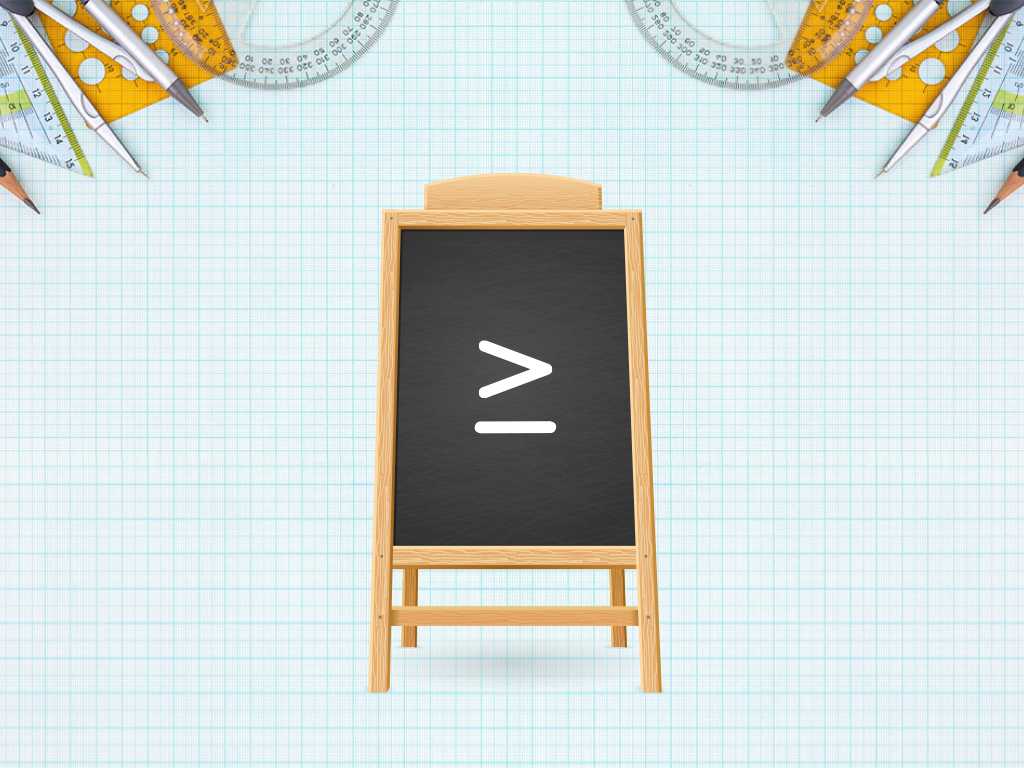
The greater than or equal to sign is a mathematical symbol that denotes an inequality between two values or numbers. It is a form in which strokes of two equal lengths connect at an acute angle at the right. These signs are classified as:
- The greater than symbol is (>). For example, if 6>3, we will read it as “6 is greater than 3′.
- The less than symbol (<). For example, if 6<3, we will read it as “6 is less than 3′.
- greater than or equal (≥). For example, if 6≥3, we will read it as “6 is greater than or equal to 3′.
- less than or equal to (≤). For example, if 6≤3, we will read it as “6 is less than or equal to 3′.
All these symbols reduce time complexity and make understanding easier. A typical use of a greater than symbol is to compare two values. The first number is greater than the second number or one value is greater than the other. The application of this symbol is in descending order, where the arrangement from the largest to smallest number is done using it. This is an approximation of a closing angle bracket.

Understanding the Greater Than (>) Symbol
The concept of the greater than symbol is what lies at the foundation of Mathematics, serving and also defining real-life situations. This sign indicated inequality in the number by informing that the value on the left is more or larger than the value on the right. It can be used to express not just numbers but also quantities, expressions, and other scenarios, making it an important element in algebra, data handling, logical reasoning, and arithmetic. When you understand the use of the greater than symbol from an early age, it helps avoid basic calculation mistakes or solving maths problems, either in school tests or competitive examinations. It is a symbol denoted by “>”, having an open mouth on the open mouth.
Understanding the Less Than (<) Symbol
Even a less-than sign is used to represent the inequality and a comparison between two values, only with a slight difference in the concept. Illustrated by a symbol “<“, it informs that the quantity on the left is smaller than or less than the one on its right. It can be used to calculate or understand different values, weights, numbers, and real-life scenarios. It builds the base of basic arithmetic for students. The best and the most simple way to identify the less than sign is to check that it has an open mouth towards the right. So, 5 < 8 means that five, which is on the ‘left’ is smaller than eight, which is on the right.

Basic Comparison Examples
Do we know what greater than or equal to sign means? The following table shows the symbols with their definitions and examples in detail.
| Symbol | Description | Example |
| = | Equal to | 3+4 = 7 |
| ≠ | Not equal to | 4 + 3 ≠ 5 |
| > | Greater than | 6 > 3 |
| ≥ | Greater than or equal to | Students ≥ 6 |
| < | Less than | 3 < 9 |
| ≤ | Less than or equal to | Students ≤ 60 |
How to Use These Symbols?
The symbols might be very confusing when it comes to their application. There are some methods to understand it better. These methods are as follows:

- Understanding symbols using points
- Alligator method
- L method
We will now discuss these methods in brief.
1. Using Number Line or Points Method
- Greater than symbol (>)
Understand the symbol from the left side to the right side. On the left hand, it has two points, and on the right side, it has one point. So write the symbol (>).

- Less than symbol (<)
Understand the symbol from the left side to the right side. On the left hand, it has one point, and on the right side, it has two points. So write the symbol (<).
2. The Alligator Method (Easy Trick for Kids)
- The crocodile or the alligator method is easy to understand, and it’s a famous method.
- Let us assume the (<) crocodile and the numbers on both sides to be its food.
- The crocodile is always hungry and wants to eat a lot of food, so its mouth will open where the food is in more significant numbers.
- We assume that the values on both sides represent the number of fish. For example, 9>2 Here, the alligator’s mouth opens towards the value nine, which means that nine is greater than 2.
3. The “L” Method to Identify Less Than
- The letter ‘L’ resembles the less than symbol “< “
- The trick to remembering how the less-than sign looks is very simple. As “less than” starts with l, the symbol < looks more like the letter L.
Some Examples to Understand more about the Symbols:
- 4>2, which denotes that 4 is greater than 2.
- 2<6, which denotes that 2 is less than 6.
- 24>2, which denotes 2×2×2×2 = 16 is greater than 2.
- (10/2)>(4/2), which denotes 5>2.
- -1<-2, -1 is less than -2.
- 0.1>0.00001, here the value 0.1 is greater than 0.00001
Greater Than or Equal To Symbol
The greater than or equal symbol represents inequality in math. It tells that the given value is greater than or equal to a particular value. This symbol is for linear inequalities where we don’t know if the variable’s value is greater than or equal to a specific value. This symbol is the “greater than” symbol ( >) with a line under it. The line below the greater sign means “equal to”. For example, x ≥ 6 means that x is either greater than or equal to 6. It defines a range of values that x can take, which starts from 6 and goes to infinity.

- The word “greater than” expresses that one quantity is greater than the other quantity.
- The “is equal to” expresses that two quantities are equal.
- When these terms are combined, they make a new term, Greater Than Or Equal To.
- This term shows, that the quantity or amount value limit could be equal to or greater than the limit given.
Some Examples of Greater Than or Equal to:
Q.Express x ≥ 17 equation in word form.
A. Here, x is greater than or equal to 17.

Q. Raj needs to score greater than or equal to 50% marks to clear the exam. Express this by using inequality.
A.x ≥ 50%

How to Solve Word Problems of Inequality
Start solving the problem by:
- Reading it thoroughly
- Highlight the details
- Recognize the variables
- Write down the equation on paper
- Solve the given problem statement
- Write the solution in complete sentences
Solved Examples:
Example 1: Dev had ₹500 rupees in his account at the beginning of the summer. He withdraws ₹25 every week and wishes to have at least ₹200 in the bank account by the end of the summer—Express Dev’s situation using the inequality symbol.
Solution: Let x be the number of weeks
Therefore, the inequality expression is
500 – 25x ≥ 200
Here the symbol (≥) fits as Dev wants to have money equal to greater than 200 by the end of the summer.
Example 2: A fruit shop owner sells a glass of juice for ₹50. He targets to earn money greater than or equal to ₹5000 in a day. Write an inequality representing this situation.
Solution: Cost of each glass of juice = ₹50
Let x equal the number of glasses of juice he sells in a day
Therefore, the total cost of x glasses of juices he sells in a day = ₹50x
The total earnings should be greater than or equal to ₹5000 a day.
So the inequality to represent this is 50x ≥ 5000.
Example 3: The minimum marks that John needs to score are 50 out of 100 to clear his math exam. Represent this statement using the greater than or equal to inequality symbol.
Solution: Let x be marks of John.
We know that the passing marks are 50 or more.
The inequality, x ≥ 50, represents the above situation.
Here x is the number of marks scored by John.
Example 4: Find the numbers that belong to the following set {x ∈ N / x ≥ 6 }.
Solution: Here, N is the set of natural numbers.
The given set is: {x ∈ N / x ≥ 6 }
It means that we have to find all the natural numbers greater than or equal to 6.
As the set of natural numbers is up to infinite, numbers that belong to the given set are 6,7,8,9,……to infinity.
Example 5: Sourav scored 30 marks in his maths exam. Riya scored 24 on the same exam. Who scored less?
Solution: Given data:
Marks scored by Sourav= 30 marks,
Marks scored by Riya= 24 marks
The inequality will be 24<30. Therefore, Riya scored less than Sourav.
Conclusion
The greater than and less than signs shape a student’s childhood by guiding them through the same. Use the method that best resonates with you or is based on their building block of mathematics. However, the key is to use them correctly. This blog serves as a quick guide to make it easier for you to crack the sums. Math can be a challenging subject; let not these simple concepts go wrong, as they are going to serve as the basis of your learning. You can download Turitos practice papers and test questions designed for real examinations.
FAQ’s
What does the greater than sign mean in mathematics?
The sign is used as an indication to compare two quantities, specifically telling which one is larger.
What is the less than sign and how is it used?
The less than symbol is exactly the opposite of the greater than sign, telling you which number is smaller. It is represented by a < sign.
How do you remember the difference between the greater than and the less than signs?
You can use different methods to understand and remember these signs without getting confused. The simplest way is through the mouth trick, which works like this:
The number that has an open mouth open towards it is the bigger one.
The value with a narrower side pointed towards it is a smaller number
What is the easy trick for kids to learn greater than and less than?
The easier way to ace every smaller than and greater than questions is by applying the “alligator method”. It says that the alligator will always want to eat the bigger number, so it has its mouth open towards the larger value.
When do we use greater than or equal to (≥) and less than or equal to (≤)?
You can use greater than, less than, or equal to symbols when measuring two different numbers, quantities, weights, expressions, etc.
How do greater than and less than signs work on a number line?
A number line is a visual representation to help students clearly understand how comparisons work. That’s how it works
Numbers increase as you move to the right
Numbers decrease as you move to the left
So,
A number to the right is greater than a number to the left
A number to the left is less than a number to the right
Relevant Articles

Fibonacci Sequence Explained: Formula, Examples, Applications & Examples
Probably most of us have never taken the time to …
Fibonacci Sequence Explained: Formula, Examples, Applications & Examples Read More »
Read More >>
Building STEM Skills for a Strongеr Acadеmic Foundation
In an еra whеrе tеchnological innovation drivеs progrеss and global …
Building STEM Skills for a Strongеr Acadеmic Foundation Read More »
Read More >>
Convert Millimeters(mm) to Inches
In mathematics, length is measured in millimeters and inches. Before …
Convert Millimeters(mm) to Inches Read More »
Read More >>Study Abroad

With Turito Study Abroad

With Turito Study Abroad

Get an Expert Advice from Turito

Get an Expert Advice from Turito
CAP

With Turito CAP.
Coding

With Turito Coding.
Robotics

With Turito RoboNinja
Tutoring

1-on-1 tutoring for the undivided attention

Comments: