

How Artificial Intelligence (AI) in Education Is Transforming Learning?

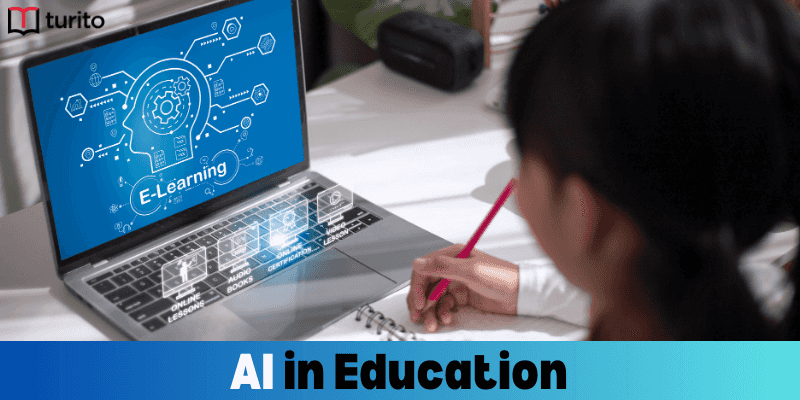
Artificial intelligence is solidifying its status as a groundbreaking technology to become a classroom staple. A study shows that nearly 9 in 10 students (89%) admit they have used Chat GPT for homework assignments. Not using it entails being left behind.
To students and parents, it means a better understanding of what they need to learn, quicker feedback, and assistance that is not confined to school hours. However, the transition is not as smooth as it could be: the disparities in access to devices, the issue of data security, academic honesty, and the lopsided results of AI-based learning are causing schools to implement AI with caution.

This post will cover the advantages and disadvantages of AI and where it is ushering in education overall.
What Is AI in Education?
AI in education (AIED) refers to the systems that take data and algorithms to complete tasks that humans are traditionally required to perform: identify misconceptions, suggest the next exercise, or provide feedback.

The technologies include basic quiz engines driven by rules or text-generating and text-explaining large language models. Importantly, AI in education does not constitute a single product; it is a combination of features, which are part of the platforms (assessment, recommendation, grading, accessibility), that have an impact on learning design.
Practical example: An adaptive math app analyzes which step a student missed in a multi-step algebra problem and produces a micro-lesson for that exact step, not simply a different problem.

How AI-Based Learning Works for Students?
The AI learning systems work in a cycle consisting of assess, adapt, deliver, and reassess. To begin with, the platform defines a baseline (short diagnostic or based on activity). After that, algorithms plot an individual route, a lesson selection, practice questions, hints, and tests based on the level of mastery.
Workflow for a student:

- Start with a short checkpoint that identifies misconceptions.
- Receive a mix of explanation, worked example, and 2-3 practice items.
- Get instant feedback: why an answer is incorrect, with a hint or a mini-video
- If the struggle persists, the system flags for a human tutor or suggests a one-to-one session.
Turito provides live instructor support with one-on-one tutoring for students. Eliminating any gaps that AI-based teaching engines might cause. Interested? Check it out today!
Key Uses of AI in Education
AI’s applied uses are already broad and growing. Here are the primary categories:

- Personalized learning paths: Systems adjust scope and sequence; results have been found to improve under specific applications (remedial math, language practice), although the quality of implementation affects the outcome.
- Intelligent tutoring system (ITS): Moderate guides, feedback, successful in math and programming.
- Automated measuring and scoring: Automation of the grading of objective items, as well as the writing of essays, saves the teacher time. But automation is also difficult due to the subtlety and creativity of the assessment.
- Learning analytics and early warning: The predictive models are utilised to determine the students who are at risk of falling behind, and to plan intervention.
- Accessibility and differentiation: The use of real-time captions, text-to-speech, and language translation makes it more accessible among different learners.
- Creation and revision of content: The teachers develop quizzes, summaries, or other explanations with the assistance of AI; it simplifies the preparation process, but this has to be checked.
How AI Supports Teaching and Classroom Instruction?
AI works best in cases where it lowers the work needed and provides teachers with information to act upon. That comes up with three classroom benefits as stated below.
Benefits:

- Focused diagnostics: Teachers get heatmaps of students’ missing standards. They can focus class time on what students don’t know. They avoid repeating content most students already understand.
- Scale differentiated resources: Auto-generated worksheets allow teachers to divide students into small groups with the right practice.
- Formative feedback loop: Short problem scoring can be done in real-time, which means that the practice can be repeated several times in one lesson.
A classroom example: a language teacher using AI to mark written grammar problems automatically this allows the teacher to spend time in the classroom addressing grammar and voice.
AI in Higher Education: Emerging Trends
Colleges are experimenting with AI across advising, assessment, research support, and mental health. Notable trends include:

- Predictive advising: Data models are used to predict which students would drop courses so that proactive outreach can be made.
- AI in research: Literature review, debugging, and simulation accelerated research.
- Evolution of assessment: Institutions are restructuring assessment to necessitate more open-ended, source-based responses and oral defences to lessen the misuse of generative devices.
- Student support bots: Chatbots respond to simple requests (deadlines, forms) and forward more complicated problems to professors.
AI Tutors vs. Traditional Tutoring Methods
These are the major differences that differentiate AI tutors from traditional tutoring:
- Availability: AI tutors are available 24/7; human tutors are constrained by time.
- Feedback: AI is accompanied by immediate, accurate feedback; human beings adjust explanations to personality and motivation.
- Cost and size: AI is cheap to use to serve a large group of students, whereas human tutors are more costly and offer connection and responsiveness.
- Motivation and trust: Human beings have a superior ability at motivation, reading feelings, and changing tone. AI is becoming more empathetic in responding, but it cannot compete with long-term mentorship.
For a solid middle ground, interaction of both is necessary. Turito’s blended services are an example of that hybrid model. AI handles the routine, humans handle the mentoring. Check out Turito Academy that blends AI smartly and efficiently, making learning easy and your exams aced.
The Future of AI in Education and Online Learning
Expectations over the next 5-10 years with AI in education and online learning:
- Improved interpretability: The pressure on vendors by policymakers and educators will encourage more vendors to clarify recommendations.
- Better privacy and control: Schools will be more transparent in the policies of consent and use of data.
- Emotion-aware learning: Early pilots will test whether detecting frustration can trigger timely human help (with strict ethical guardrails).
- Broadened implementation of blended models: The implementations will be dominated by systems that integrate adaptive AI with planned human interactions.
AI is useful in terms of reach and efficiency, but learning is a social, generative process that should be enhanced by human judgment. A blended approach serves best!
Conclusion: Personalized Learning Through AI
AI is a tool that is strong, not perfect, and situational. When applied with clear objectives, teacher training, and privacy consideration, it can enrich learning, decrease the routine workload, and reveal the appropriate interventions in a timely manner.
The aspects that show promise in deployments with the most potential are the fusion of adaptive algorithms with human mentorship: the AI is responsible for the practice and diagnosis, whereas the teachers and tutors are responsible for higher-level thinking and motivation.
In case you are considering how AI-based learning will help your child achieve their objectives, get in touch. Discuss the needs of your child, or get a free chat on what the appropriate learning plan would be, and help your child aim for a brighter future.
Frequently Asked questions
What Is an AI Tutor in Education and How Does It Support Student Learning?
An AI tutor reviews the student’s inputs, the wrong answers are pointed out, and stepwise explanations or additional practices are provided. It facilitates learning with real-time feedback and customized learning pace in addition to twenty-four-hour academic support.
Is Artificial Intelligence in Education Better Than Traditional Human Tutoring?
AI excels at speed, accuracy checks, and repetitive practice. Human tutors provide emotional knowledge, inspiration, and subtle logic. When they are combined, students achieve the best results.
How Can Using AI in Education Help With School Homework and Assignments?
AI points out mistakes and provides students with hints rather than answers. This eliminates misunderstanding and makes learners understand concepts more effectively.
Which AI-Based Learning Platform Is Best for Students?
The strongest platforms pair adaptive algorithms with high-quality lessons. Turito is an example that offers structured modules, personalized exercises, and clear progress insights.
How Do AI Learning Platforms Personalize Lessons Through Online AI Learning?
They check accuracy, learning rate, and patterns of response and modify difficulty, sequence of content, and type of explanation to each learner.
Are AI Tutors Safe and Effective for Kids in the Education System?
When the platform adheres to rigid rules of privacy and offers age-related experiences, it can be considered safe. Parental control also guarantees healthy and balanced use.
How Can Parents Track Their Child’s Learning Progress Using AI in Education Tools?
Parent dashboards show the mastery levels, time, improvements, and areas of reinforcement.
Can AI in Education Replace After-School Tutoring Programs?
AI can be used to complement the normal practice; however, human tutors are required for motivation, accountability, and critical thinking.
How Do AI Tools Support Different Subjects and Grades in School and Higher Education?
AI can edit the explanations and assignments to respective grades, such as math, science, reading, writing, and basics.
Is AI Tutoring More Affordable Than Traditional Tutoring Services?
Yes. AI is less expensive; individual human tutoring is generally more expensive due to in-depth and personalised help.
Relevant Articles

How Kids Can Learn Coding Smarter with AI-Powered Guidance?
As time goes on, more and more children will be …
How Kids Can Learn Coding Smarter with AI-Powered Guidance? Read More »
Read More >>
Why AI-Powered Personalized Learning Platform Is the Future of Education
AI-Powered Personalized AI is the new norm. Influencing our decisions …
Why AI-Powered Personalized Learning Platform Is the Future of Education Read More »
Read More >>
How Robotics and AI Help Kids Learn Coding, Creativity, and STEM Smarter
In recent times, it’s evident that technology has taken over …
How Robotics and AI Help Kids Learn Coding, Creativity, and STEM Smarter Read More »
Read More >>
AI for Math Problems: A Smarter Way for Students to Learn and Solve Math
Math has never been an easy subject for students. Some …
AI for Math Problems: A Smarter Way for Students to Learn and Solve Math Read More »
Read More >>Study Abroad

With Turito Study Abroad

With Turito Study Abroad

Get an Expert Advice from Turito

Get an Expert Advice from Turito
CAP

With Turito CAP.
Coding
With Turito Coding.
Robotics
With Turito RoboNinja
Tutoring
1-on-1 tutoring for the undivided attention

Comments: