

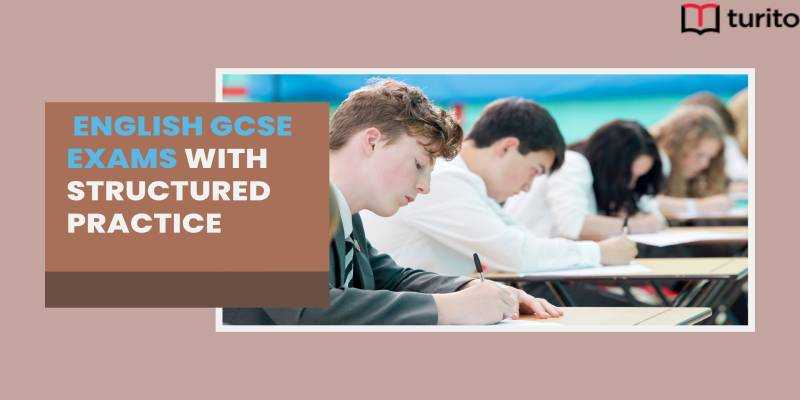
How to Prepare for English GCSE Exams with Structured Practice

As you must be aware, the GCSE (General Certificate of Secondary Education) exams emerged in 1986 to combat the divisions created by the separate examination systems at the time. Since the O-level exams and CSE exams of the 1950s gave rise to discrimination in employment, the UK government decided to formulate a policy that unified both systems into one. It aimed at modernizing the curriculum and improving educational access for students with varying capabilities. The English language is one of the core subjects in the GCSE exam.
Most educators advise students to practice reading from day one of their English class. Even without an exam knocking on the door, proficiency in this language comes with numerous academic and professional perks. It has a ripple effect on student performance across subjects and throughout their career. Skills acquired when learning English help students attract global opportunities. Students with high GCSE English exam scores are also able to communicate with clarity and feel equipped to make an impact along the way. Therefore, in this guide, we’ll help you prepare for the English GCSE exam through guidance that secures you top grades.

Different GCSE Boards in the UK for the English Exams
Scheduled during the months of May and June, the GCSE exams are organized by multiple boards. AQA (Assessments and Qualifications Alliance) is the largest board in the UK overseeing major GCSE and A-level exams, followed closely by OCR. Also known as the Oxford, Cambridge, and RSA examinations, the OCR is affiliated with the University of Cambridge. Additionally, Edexcel is another board that offers IGCSEs for domestic as well as international learners. Depending on whether you’re homeschooled or are enrolled in a school or college, your teachers will help you decide which board suits you best.
Understanding the English GCSE Exam Format
Since AQA covers approximately 61% of all GCSE exams in the UK, let’s understand the GCSE exam format for English exams under this board. The gcse english exams are divided into two papers per subject.

- What to Expect in English Language Papers
Each paper in this exam carries 80 marks of weightage and has a time duration of 1 hour and 45 minutes.
Paper 1: Explorations in Creative Reading and Writing

Divided into two sections, this paper tests the understanding of literary techniques in students while also encouraging them to create their own.
- Section A: Tests the grasp of literary techniques in fiction through reading and writing-based questions. You’ll be provided with an unseen text and asked to outline narrative and descriptive features in it.
- Section B: Tests the creative writing skills of students. Drawing inspiration from the text in Section A, you’ll be required to display your own narrative and descriptive writing skills.
It is important to note that from 2026, a multiple-choice question format will be introduced in this paper for easier accessibility and evaluation of students.

Paper 2: Writers’ Viewpoints and Perspectives
This paper is also divided into two sections and evaluates a student’s ability to understand differing viewpoints and perspectives.

- Section A: Reading comprehension and critical thinking skills are evaluated in this section. Students are presented with two linked sources from different literary periods and genres. They are asked to determine how each text represents a specific viewpoint or perspective.
- Section B: Writing skills of students are evaluated in the second section of the paper. Students are required to compose a text keeping a specific audience and objective in mind. Depending on the theme, they have to incorporate their own perspective into the text.
What to Expect in English Literature Papers
The English Literature exam is divided into two papers. The first paper carries 64 marks with 40% of weightage. The second paper carries a total of 96 marks with 60% weightage.
Paper 1: Shakespeare and the 19th Century Novels

Divided into two sections, this paper has a time duration of 1 hour and 45 minutes. Understanding of various key themes, important plot points, and characters in a play is evaluated.
- Section A: Students are required to answer one question based on an extract shared from Shakespeare’s works. They have to write about the extract as well as the play in relation to the extract.
- Section B: An extract from a 19th-century novel is provided to students. They are required to demonstrate their understanding of the extract as well as the play in relation to the extract.
Paper 2: Modern Texts and Poetry

Divided into three sections, this paper of the gcse english course has a time duration of 2 hours and 15 minutes.
- Section A: Two questions are presented to students based on two modern texts. They have to select one and answer the question in the essay format.
- Section B: Students are given one question based on one poem from a cluster of modern poetry they have studied. They are asked to compare the printed poem with another poem from the same cluster and demonstrate their understanding.
- Section C: Two unseen poems are presented to the student with two separate questions. The first question requires them to write about the first poem, while the second question evaluates their ability to compare the differences/similarities between the poems.
How Structured Practice Improves GCSE English Performance
Having a vision that sets you up for success is essential when preparing the gcse english course. A gcse preparation strategy is central to the vision, and so is structured practice, especially given the text-heavy nature of the exam. Here are a few exercises to enhance your preparation for the gcse english exam:
Building Strong Reading and Comprehension Skills
We’ve all heard our teachers chant the undeniable mantra about reading and its numerous benefits for a student. Habitual readers tend to find preparation easy for the gcse english exams. They are able to focus on complex texts, comprehend them easily, and retain their attention for longer periods of time. Moreover, their vocabularies are unique, and they are able to analyze a vast amount of information more effectively than their non-reader peers. This tells you how fundamental reading and comprehension skills are to your gcse english exam preparation.
Developing Clear, Effective Writing Techniques
Systematically organized knowledge can be easily followed and understood. This is why students are recommended structured practice for their gcse english exams. It focuses on learning how to organize paragraphs when writing. Students are taught to use an outline or a clear framework to present their thoughts to the examiner. Increased practice of structure in the gcse english course improves coherence and contributes to the effectiveness of essays written by a student. Moreover, they are able to plan their time on the exam day and secure good grades.
Strengthening Critical Thinking and Interpretation
Structured practice helps students improve their critical thinking skills through in-depth reading. They learn to interpret the text from different perspectives, which in turn contributes to their contextual and cultural understanding of various texts. Strong thinking skills and accurate interpretation can help gain higher points when it’s an integral part of your exam strategy.
Using Past Papers Effectively For Revision
Practicing in a simulated environment is one of the most effective tips for gcse english exam that ensures you’re in your best form on the exam day. Here’s how past papers can help revise effectively:
How to Analyze Questions Before Answering
Carefully read the text provided on the question paper. Understand the purpose of the question and what it is asking of you. If it’s text-heavy, you’ll need to pay attention to detail and exercise critical thinking. Similarly, if it is a creative writing question, pre-plan your strategy.
Understanding Mark Schemes
Marking schemes for each question will be mentioned in the paper. Understand the weightage of each question and plan your answer accordingly.
Identifying Common Patterns Across Past Papers
Solving gcse english language past papers or practice questions in timed conditions helps you realistically assess your current knowledge and skills. You’re able to spot common patterns and focus on the repetitive themes that occur in them. Your tutor is also able to analyze your performance based on the results and target areas of weakness in their lesson plans.
Revision Strategies That Actually Work
For a student, effective revision strategies are an essential part of a holistic gcse english revision guide. They help manage time and apply learning without the novel stressfulness of D-day.
- Revise key highlights and notes from the texts in the curriculum repeatedly
- Focus on SPaG. Read a lot of different types of texts to refine your use of punctuation
- Practice writing on a diverse range of topics under timed conditions
- Make learning from your mistakes a key part of your gcse english revision guide
- Solve past papers frequently. They act as a confidence booster.
- Seek guidance on learning obstacles from your GCSE tutor
Practical Exam Techniques Students Should Use
Your preparation for the gcse english exams will be incomplete without a solid exam day strategy. Some key tips for gcse english exam to remember are as follows:
- Get plenty of sleep the night before the exam
- Read the instructions given on the paper carefully
- Tackle the easy questions first
- Plan your time and approach for answering questions beforehand
- Focus on one question at a time and do not overwhelm yourself
- In case you feel anxious, practice deep breathing to calm yourself
Have faith in yourself and be realistic in your gcse preparation journey. Frequent gcse english language revision is a good way to retain information and enhance your performance for the English GCSE exam, too.
How a GCSE English Tutor Can Improve Exam Readiness
Whether you’re enrolled in a school/college or being taught at home, tutored learning comes with a distinct promise of personalization that can help fetch higher scores. When starting early, a tutor can help you determine your strengths and weaknesses in English accurately. They will plan your English lessons in a manner that enables you to grow organically. One-on-one attention allows you to study in a stress-free environment where your unique learning style is taken into account.
For example, Turito’s hyper-personalized learning format includes features like student assessments, AI learning reports, and engaging learning techniques like gamification. A combination of these features contributes to a dynamic learning environment where tutors and students share a healthy and thriving educational journey.
Conclusion
Exams and their preparation journeys can be educationally challenging as well as highly demanding emotional experiences. Students go through highs and lows of success and failure. In the midst of all activity, it is essential to remember that your progress in the gcse english course is not meant to be linear. While some days might be highly productive, others might lead to easy burnout. Both scenarios are common among students sitting for English GCSE exams.
Let your Turito educator guide you on the hard days. When traditional plans fail, our tutors offer personalized learning solutions to sustain your progress. With 30+ years of teaching experience, you can expect your Turito GCSE mentor to navigate learning obstacles expertly and empower you in securing a high score. Explore learning options on the website and choose a tutor/mentor aligned with your English GCSE exam requirements. Good luck!
Frequently Asked Questions
How early should I start preparing for the English GCSE exam?
Students can choose to draw up a gcse preparation strategy as early as Year 9. This allows them plenty of time for revision and helps improve their command of both the English language as well as the overall gcse english course curriculum. They are able to learn new topics organically and at a realistic pace while also developing essential literary skills through well-paced personalized tutoring.
What is the best way to revise for the English Language Paper 1?
Reading forms a core part of the gcse english language revision strategy for the English Language Paper 1. Since this paper tests students on the narrative and descriptive techniques in a literary text, students have to be well-acquainted with tones, styles, and themes. Focusing on structured practice and improving one’s SPaG can significantly contribute to a good final score.
How do past papers improve English exam performance?
Practicing gcse english language past papers and similar practice questions can aid students by simulating an environment similar to the one they’ll experience on their gcse english exam day. It improves their time management skills and familiarizes students with the kind of questions they’ll encounter on the day. Past papers also expose students to a wide variety of questions in the subject. Through targeted practice of past questions, they feel more confident and composed when solving questions on the day of the exam.
Is it worth getting a GCSE English tutor?
Absolutely. A GCSE tutor does not simply bring teaching experience and English language expertise to the table. They are accomplished educators skilled in evidence-based learning and come with years of competency in mentoring specifically for GCSE. Along with enhancing a student’s command of English, they are also able to optimize learning goals to align with GCSE’s exam format. This empowers students to grow in multiple directions and attain skills beyond the curriculum alone.
Relevant Articles

20 English Topics Kids Can Practice Speaking On
Public speaking brings a healthy sense of excitement, even for …
20 English Topics Kids Can Practice Speaking On Read More »
Read More >>
Argumentative Essay: Definition, Format, Structure, and Examples
Want to put your opinions forward? Then you need more …
Argumentative Essay: Definition, Format, Structure, and Examples Read More »
Read More >>
How to Encourage Children to Speak Confidently in English
When countries like England began building colonies across the world, …
How to Encourage Children to Speak Confidently in English Read More »
Read More >>Study Abroad

With Turito Study Abroad

With Turito Study Abroad

Get an Expert Advice from Turito

Get an Expert Advice from Turito
CAP

With Turito CAP.
Coding

With Turito Coding.
Robotics

With Turito RoboNinja
Tutoring

1-on-1 tutoring for the undivided attention

Comments: