

Mass of Proton: Definition, Value in kg and amu, and Key Properties

What Is a Proton?
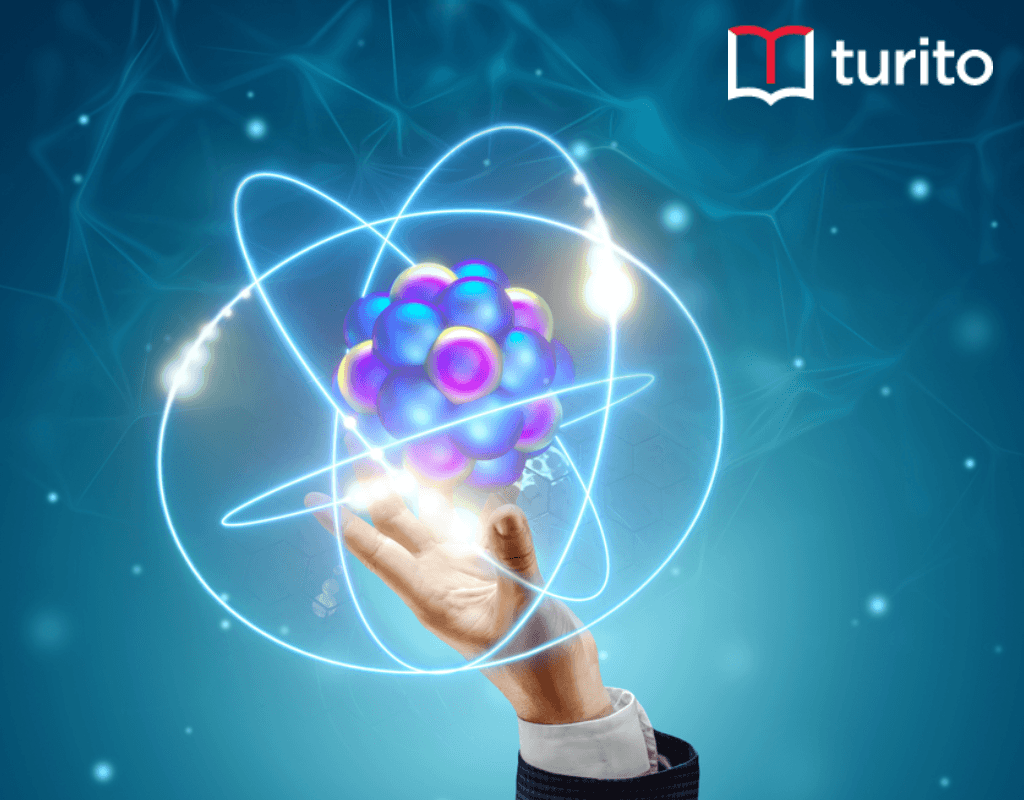
Protons are defined as the positively charged particles present in an atom’s nucleus. An atom comprises electrons, protons, and neutrons. Its entire mass is concentrated in the nucleus that lies at its centre. The collective name for protons and neutrons present in a nucleus is nucleons. Electrons orbit around the nucleus in a circular path.
Mass of Proton
The mass of proton is approximately 1.6726 × 10⁻²⁷ kilograms, which is remarkably small but incredibly significant. To put this in perspective, the mass of proton is approximately 1,836 times heavier than that of an electron. Yet it’s still considered a lightweight particle in the atomic world. The main mass of this originates not in the quarks, but in the interaction energy between the quarks and the gluons contained in the structure of the proton itself.

This value has been measured by scientists in a number of ways, such as atomic mass calculations and comparison of charge to mass ratio. Such measurements are useful to know more about the atomic structure and nuclear reactions.
Discovery of the Proton
In 1886, Goldstein found that the charge-to-massratio of positive particles is dependent on the nature of the gas present in the discharge tube. This indicates that the charge-to-mass ratio for different gases was different.

It was observed that the charge-to-massratio of the positively charged rays was highest for hydrogen gas used in the discharge tube. The main reason for this is that hydrogen is the lightest atom, so its mass will be the least, and the e/m ratio is the highest.
The name given to the positively charged rays in the discharge tube was proton, which can be generated when an electron is removed from the hydrogen atom.

- H (hydrogen atom) → H+ (proton) + e– (electron)
Therefore, we can say that a proton is a hydrogen ion (H+).
Properties of a Proton
Proton is positively charged with the following physical properties:

Mass of Proton:The relative mass of proton equals the mass of a hydrogen atom. There is one proton and one electron in a hydrogen atom. As an electron’s mass is considered negligible, it can be said that a hydrogen atom’s mass equals that of a proton. The mass of proton is considered 1836times the electron mass.
Mass of one proton =1.676 × 10⁻²⁷ kg = 1.676 × 10⁻²⁴ g = 1.6726219 × 10⁻²⁷ kg

The Proton charge is equal to and opposite to that of an electron. Therefore, it has a positive unit charge.
Charge of a proton = + 1.602 × 10⁻¹⁹ coulombs

Comparison of Masses(electrons, protons, and neutrons)
The mass of electrons, protons, and neutrons differ. Atoms comprise small particles known as protons, electrons, and neutrons. The nucleus contains neutrons and protons in the centre of the atom. Electrons surround it. While protons are positively charged, electrons carry a negative charge.
A proton is a stable subatomic positively-charged particle having a charge equal to that of a unit electron charge. It has a rest mass of 1.67262 × 10⁻²⁷ kg, which is 1,836 the electron mass.

The nuclei of all atoms are made up of electrically neutral neutrons and protons, except the hydrogen nucleus, which contains only one proton. Every chemical element’s nucleus has the same number of protons. The atomic number of an element is defined by this number, and it also determines its position in the periodic table. When the number of electrons and protons orbiting the nucleus is equal, the atom is considered to be electrically neutral.
Proton’s discovery traces back to the time when the earliest investigations about atomic structure were being made. While studying ionised gaseous molecules and atoms which had undergone electron stripping, JJ Thomson and Wilhelm Wien identified a positively charged particle whose mass is equal to that of the hydrogen atom. Ernest Rutherford (1919) showed that under alpha-particle bombardment, nitrogen ejects what appears to be hydrogen nuclei. By 1920, the hydrogen nucleus was accepted as an elementary particle and was named proton.
In the late 20th century, high-energy particle Physics studies revised the structural understanding of the proton’s nature within the group of subatomic particles. It has been revealed that protons and neutrons are composed of smaller particles, named baryons,which are particles made up of three elementary particles called quarks.
High velocities are given from protons from ionised hydrogen in particle accelerators and are commonly employed as projectiles to produce nuclear reactions and study them. The main constituents of primary cosmic rays are protons. They are also among the products of some forms of artificial nuclear reactions.
Mass of Proton vs Electron
A proton weighs about 1.6726 × 10⁻²⁷kilograms, while an electron is much lighter at 9.109 × 10⁻³¹kilograms. This implies that an electron is approximately 1,836 times lighter than a proton.
It is a little crazy, when you consider it–the electron is so light that scientists often neglect its mass when finding out the total weight of an atom. Although both particles are extremely tiny, the distinction between the two is enormous. The additional mass of the proton is the primary factor that makes the nucleus have most of the weight in an atom.
The difference in mass becomes extremely important when you are dealing with atoms in chemistry or physics. This is the reason the proton is the one that dominates the atomic mass number and not the electron.
Mass of Proton vs Neutron
A proton weighs approximately1.6726 × 10⁻²⁷kilograms, and a neutron comes in at around 1.6749 × 10⁻²⁷kilograms.
The neutron is just a little heavier, so little that it is hardly noticeable. This is the reason why scientists refer to them under a common name: nucleons. The particles are both suspended in the nucleus and equally serve as a source of mass to an atom. The most important distinction is the charge of a particle; protons are positively charged, but neutrons are entirely neutral.
Due to such similarity in weight, it is possible to determine the mass number of an atom by just adding the numbers of protons and neutrons. This knowledge can be used to justify why various isotopes of the same element possess varying masses but react in the same way during chemical reactions.
Charge-to-Mass Ratio: Proton vs Electron
The proportion of charge to mass is a very convenient method of comparing protons and electrons.
- The mass of proton is 1.6726 × 10⁻²⁷ kg with a charge of +1.602 × 10⁻¹⁹ coulombs, giving it a charge-to-mass ratio of about 9.58 × 10⁷ coulombs per kilogram.
- An electron has a charge of –1.602 × 10⁻¹⁹ coulombs and a mass of 9.109 × 10⁻³¹ kg, resulting in a ratio of about 1.76 × 10¹¹ coulombs per kilogram.
This distinction is important since it influences the behaviour of particles in electric and magnetic fields. In these fields, electrons become deflected more easily than protons due to their higher ratio.
In fact, this property was exploited by scientists to identify protons in the 1800s- scientists observed that hydrogen gas possessed dissimilar proportions of charge to mass as compared to other gases in discharge tubes. This finding was revolutionary to the knowledge of the structure of atoms.
Mass of Proton in Different Units
Scientists represent the mass of protons in various units depending on the discipline of study and the kind of calculation they are undertaking. Being able to change between these units comes in very handy when you are studying atoms and molecules.
Mass of Proton in Kilograms (kg)
The mass of proton in kg is 1.6726 × 10⁻²⁷ kg. It is the usual SI unit that is favorable with physicists when they are calculating forces, energy, and nuclear reactions. It is the most accurate measurement by scientists.
Mass of Proton in Atomic Mass Units (amu)
The mass of protons in amu has a value of about 1.0073 amu. This unit is commonly used by chemists and physicists since computations of atomic and molecular weights are a lot easier when working with amu.
Mass of Proton in Grams (g)
The mass of proton is approximately 1.6726 × 10⁻²⁴ g. The form comes in handy when carrying out calculations that involve greater amounts of matter or in cases of changing between different measurement systems that are in use in chemistry labs.
How Is the mass of proton Determined?
In 1886, Goldstein noticed in his experiment that the charge: mass ratio of positively charged particles is dependent on the nature of the gas present in the discharge tube. This means that the charge-to-mass ratio for different gases varies. He made an observation that the charge: mass ratio of the positively charged rays was higher for hydrogen gas used in the discharge tube. This was mainly due to the reason that the hydrogen atom has the lowest weight, so its m will be the least. Therefore, the e/m ratio here will be the highest. Later, these positively charged rays in the discharge tube were named protons. It can also be said that we can produce a proton if an electron is removed from a hydrogen atom, or a proton is a hydrogen ion.
The atomic mass of 1 proton can be calculated by using the three methods given below:
- Calculation from theory
- Atomic Mass Method
- Charge/Mass comparisons with an electron
- Calculation from Theory: Einstein gave his relativity theory in the 20th century, which beautifully explained the concept that energy and mass are interchangeable. This means that mass can be changed to energy and vice versa. The mass of 1 proton in amu can be derived from the theory mentioned above in this method.
The internal structure of protons consists of three quarks held together by attraction forces called gluons. According to naive norms, each quark would be given a mass of ⅓ of a proton in amu. However, in actuality, 95-98% of the proton mass is not contributed by the quark mass. On the other hand, the mass of protons is mostly derived from the interaction energy between the quark forces with the help of the energy and mass interchangeable theory, or E=mc2.
- By Atomic Molar Mass Method: One mole of a hydrogen atom has a weight of about 1.0079 g. Therefore, the weight of each mole of proton in a hydrogen atom is about 1.0079g.
As one hydrogen mole is equal to 6.022 * 1023 particles and the weight of the proton is equal to 1.0079 g, we can divide the proton mass by the mole number and get (1.0079 /6.022×1023). Therefore, the mass of proton is equal to 1.6737×10⁻²⁴ g.
Note that an atom has an electron to balance the charge of a proton. This experiment can be performed with an atom of the periodic table.
- Mass Comparisons with Electron: The bend of the atom in this method is quantified when entering the standardised magnetic field or electric field. The bending magnitude also indicates the mass of the proton by performing comparisons with the mass of electrons. An experiment’s main idea is the same as causing a rolling ball to move, where a heavy proton will always be deflected by a constant force to a small extent from a straight-line movement. This deflection is even more in electrons.
Relative Mass of Proton
The relative mass of proton is a good measure of how particles of an atom relate to each other. As we read earlier, the electron is very light such that it hardly adds to the overall atomic mass.
When you are counting the mass number of an atom, you only count protons and neutrons and totally ignore the electrons. This is an important property to be studied to know more about the structure of atoms and why various elements have varying weights. Neutrons and protons are almost identical in their relative mass. This is the reason why they are collectively referred to as nucleons by scientists.
Relative mass is important because it makes you understand how atoms are constructed and how chemistry works as it does.
Charge of a Proton
The charge of protons is a fundamental property that defines how atoms function. A proton carries a positive electric charge of +1.602 × 10⁻¹⁹ coulombs; the negative electric charge of an electron is equal in value but opposite.
It is this positive charge that pulls in electrons and holds them in their orbit around the nucleus. The electrical forces that bind the atoms together and enable chemical bonding are formed by protons. Atoms are neutral due to the equal quantity of protons and electrons within the atom.
The proton and electron have different charge to mass ratio. This influences their behaviors in the electromagnetic fields. The chemistry and molecular structures that we observe would not exist without the proton charge.
Why Proton Mass Is Important in Atomic Structure?
Aspect |
Explanation |
|
Determines Atomic Mass |
Protons, together with neutrons, make up most of an atom’s mass and determine its atomic mass number. |
Defines Elements |
Every element is characterized by the number of protons that it has, which identifies it in the periodic table. |
Affects Stability |
The number of neutrons compared to the number of protons defines the stability or the radioactivity of a nucleus. |
Powers Energy |
Proton mass may be used to generate energy as per E = mc 2, which drives stars and nuclear plants in nuclear reactions. |
Conclusion
As protons are vital subatomic particles, having knowledge about their properties is very important from a Chemistry point of view. We hope that this article helped clear some of your misconceptions about the topic and got you acquainted with some more facts you were unaware of.
Frequently Asked Questions
Do electrons have mass?
When we compare an electron with one neutron’s mass, it is considered massless. Also, electron mass is neglected when we calculate an atom’s mass number.
Who discovered the proton?
Rutherford discovered protons in his experiment called the gold foil experiment in 1917-1919.
How many protons would weigh 1 kg?
Approximately 5.98 × 10²⁶ protons together have a mass of 1 kilogram.
What is the mass of proton in Atomic Mass Units?
The mass of proton is about 1.0073 atomic mass units (amu).
Which is heavier, a proton or a neutron?
A neutron is slightly heavier than a proton, by about 0.1%.
Does the mass of proton ever change?
In normal conditions, the mass of proton remains the same. It is a basic constant and will not change regardless of the proton being free or even a part of an atom.
Relevant Articles

Equations of Motion : Definition, Formulas, & FAQs
Introduction to Equations of Motion? Physics equations of motion are …
Equations of Motion : Definition, Formulas, & FAQs Read More »
Read More >>
Newton’s First Law of Motion: Definition, Formula, and Examples
Statement of Newton’s First Law of Motion Newton proposed three …
Newton’s First Law of Motion: Definition, Formula, and Examples Read More »
Read More >>
Types of Switches – Definition, Classification, and Characteristics
What Is a Switch? In electrical circuits and electronics, a …
Types of Switches – Definition, Classification, and Characteristics Read More »
Read More >>
Six Simple Machines Explained: Definition, Types & Examples
What Is a Simple Machine? (Definition & Purpose) Simple machines …
Six Simple Machines Explained: Definition, Types & Examples Read More »
Read More >>Study Abroad

With Turito Study Abroad

With Turito Study Abroad

Get an Expert Advice from Turito

Get an Expert Advice from Turito
CAP

With Turito CAP.
Coding

With Turito Coding.
Robotics

With Turito RoboNinja
Tutoring

1-on-1 tutoring for the undivided attention

Comments: