

Robotics Activities for Middle School Students

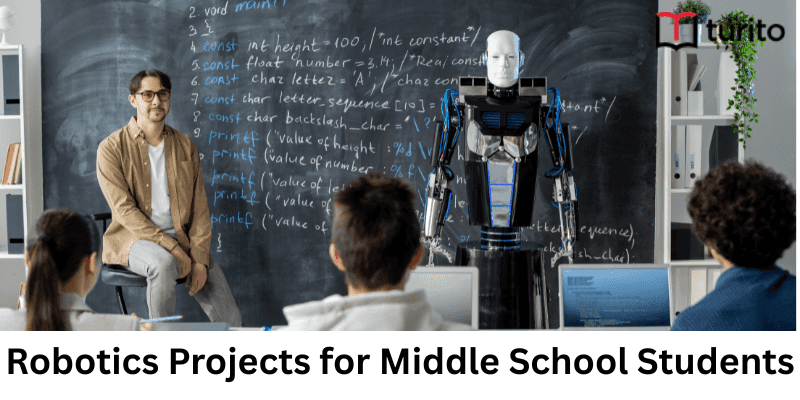
If you’ve ever watched a group of middle schoolers work on a robotics kit, you’ll know what pure curiosity looks like. One student is turning the wheels upside down just to see if it’ll still roll. Another is scribbling a “design” that looks like a doodle of a toaster with legs. And then there’s always that one kid who insists, “I’m coding the robot to dance.” Moments like these are what make robotics such a perfect playground for this age group.
Middle school is when kids are caught between play and serious study. In this age, they’re curious about everything under the sun, restless, and ready to go out of the box. That’s where robotics comes into play with its hands-on learning. It feels like play, but it secretly sneaks in major cognitive development. The best part? They don’t even realize they’re learning something as serious as systems design while they’re laughing at a robot bumping into a chair. In this article, we’ll go over some fascinating robotics activities as a part of STEM education that help bring out varied skills.

Why Robotics Adds Value at This Age
For middle schoolers, traditional learning often feels like “rules and formulas.” Robotics turns those rules into experiments. It’s like flipping a switch: algebra stops being numbers on a whiteboard and becomes the reason why the motor spins at the right speed. Suddenly, science isn’t something to memorize; it’s something you use.
Robotics gives students more than just STEM education. It teaches resilience. Kids quickly learn that robots almost never work perfectly the first time. Maybe the wheels wobble, maybe the code misfires, maybe the robot keeps turning left for no reason at all. These hiccups teach persistence far better than a lecture ever could.

Activities That Spark Curiosity
Now, let’s get into the fun part: actual robotics activities you can try with middle schoolers. Each one has its own flavor, from quick wins to deep dives.
1. Start Simple: Build and Play
Think of LEGO robotics kits or even budget-friendly DIY sets. The goal here is not to create a NASA-grade rover but to let kids explore basic building. Even if they just tighten a screw, it can do wonders for their cognitive functions.

The traditional line-following robot is an excellent first project. Students can build a robot that follows a strip of black tape around the floor of the classroom using simple sensors. It feels powerful to see their invention follow such a simple order; it’s like they’ve just unlocked a secret code to the universe.
2. Add Obstacles: Make It Think
Once they’re comfortable, step things up in STEM education with an obstacle-avoiding robot. Here’s where ultrasonic sensors come into play. It’s incredibly satisfying for students to watch their robot “see” a chair in its path and decide to swerve. The lesson? Coding logic and real-world problem-solving can be as thrilling as a video game.

3. Remote Control: Take Charge
If you want to inject excitement into STEM education, try building a remote-controlled robot. Whether it’s Bluetooth or simple infrared controls, this activity instantly turns into a mini-race day in the classroom. I’ve seen students spend hours fine-tuning their robots to be “the fastest in the room.” It’s playful, competitive, and subtly teaches communication protocols.
4. Coding Challenges: Brains Before Brawn
Once the basics are covered, bring in coding. Online platforms or even block-based coding for kids’ apps allow students to program behaviors. You might set challenges:

- Make your robot spin in a square.
- Program it to stop at the sound of a clap.
- Create a short “dance routine.”
These activities don’t just strengthen the mind; they also make learning fun.
5. Team Competitions: Battle or Maze
Finally, nothing boosts energy like a friendly competition. Some schools run “mini battle bot” contests where robots push each other out of a ring. Others prefer maze-solving races. Either way, teamwork becomes the star. Kids learn to strategize, divide tasks, and cheer each other while climbing higher steps in STEM education.

The Hidden Skills They Pick Up
Beyond the excitement, robotics projects quietly shape habits that stick. Students sharpen critical thinking by debugging why their code isn’t working. They learn patience because fixing wiring errors can be a test of endurance. They grow in collaboration, since no one builds a robot in isolation; someone assembles, another codes, and another documents progress.
Even more valuable is the confidence they gain. Imagine being a 12-year-old and seeing something you made come to life, moving across the floor like a tiny mechanical pet. That moment of “I made this” has been the spark that drove Einstein and Newton where they are today.

Role of Teachers and Parents
Of course, kids don’t get here alone. Teachers and parents play the quiet but crucial role of facilitators. You don’t need to be an engineer yourself; what matters is creating an environment where experimentation feels safe.
And yes, don’t forget to provide tools, like a simple kit, access to a workshop, or even a laptop with coding software goes a long way. Give them space to think and play around. But remember the most important part. A robot that moves two inches before falling over deserves just as much applause as one that navigates a maze. That is an impressionable age, so make sure not to kill the excitement within children and celebrate the smallest wins.
Parents can extend this learning at home by signing up for local robotics clubs or encouraging participation in competitions. Teachers, on the other hand, can integrate robotics into STEM education, turning traditional classrooms into makerspaces.
Conclusion
Robotics is far from any other extracurricular activity; it’s one of the earliest signs of innovation. And this curiosity is what has sparked inventions that brought mankind to where it is today, so instead of killing that curiosity, spark it into something truly meaningful with these activities.
Remember, you might think they’re playing, but it could be the beginning of something great. Here at Turito, we always encourage curiosity and creativity, as that’s what would truly get them far in life, and not grades.
Our online robotics programs for K-8 students focus on hands-on, project-based learning with DIY projects and a learner-centric curriculum. Get into learning the use of educational robot kits, live interactive sessions, and opportunities to build practical tech and academic skills in a fun and understandable way!
Frequently Asked Questions
1.At what age should kids start learning robotics?
Middle school is a great period since kids are old enough to understand fundamental code and mechanics but still young enough to learn through play and curiosity. That said, even youngsters who are younger can play with simple robotics kits made for novices.
2.Do students need prior coding experience to try robotics?
Not at all. Many starter kits are made for people who have never coded before and employ visual or block-based coding, which is more like putting together jigsaw pieces than writing complicated lines of code. Students can slowly go on to languages like Python, Arduino, or Java as they get more comfortable.
3.How can parents encourage robotics at home if schools don’t offer it?
Start simply by buying a simple DIY kit or looking into free coding tools made for youngsters. Let them make mistakes, encourage them to play around, and applaud minor triumphs. If you need more help, local groups, online courses, or weekend workshops can also help you stay on track.
Relevant Articles

Beginner Robotics Concepts Explained in Simple Terms
So you’re someone who is really enthusiastic about robots and …
Beginner Robotics Concepts Explained in Simple Terms Read More »
Read More >>
How Robotics Helps Children Build Confidence: 5 Key Benefits
Have you ever seen the face of a child brighten …
How Robotics Helps Children Build Confidence: 5 Key Benefits Read More »
Read More >>
How Robotics and AI Help Kids Learn Coding, Creativity, and STEM Smarter
In recent times, it’s evident that technology has taken over …
How Robotics and AI Help Kids Learn Coding, Creativity, and STEM Smarter Read More »
Read More >>
What Are Sensors and Actuators in Robots? Simple Explanation for Beginners
Have you ever wondered how robots are aware of things …
What Are Sensors and Actuators in Robots? Simple Explanation for Beginners Read More »
Read More >>Study Abroad

With Turito Study Abroad

With Turito Study Abroad

Get an Expert Advice from Turito

Get an Expert Advice from Turito
CAP

With Turito CAP.
Coding

With Turito Coding.
Robotics
With Turito RoboNinja
Tutoring

1-on-1 tutoring for the undivided attention

Comments: