



Different ways to Induce Current in the Coil


Introduction:
The electric potential produced by changing magnetic flux is called induced electric potential. The induced electric potential is also called electromotive force (Emf). The electromotive force (Emf) is the electric potential that is generated when there is a transfer of energy from one form to another. Like producing electrical energy by changing magnetic field.
Whenever there is a change in the magnetic flux linked with a closed circuit, an emf produces a current known as induced current. However, it lasts only as long as the magnetic flux is changing.
Explanation:
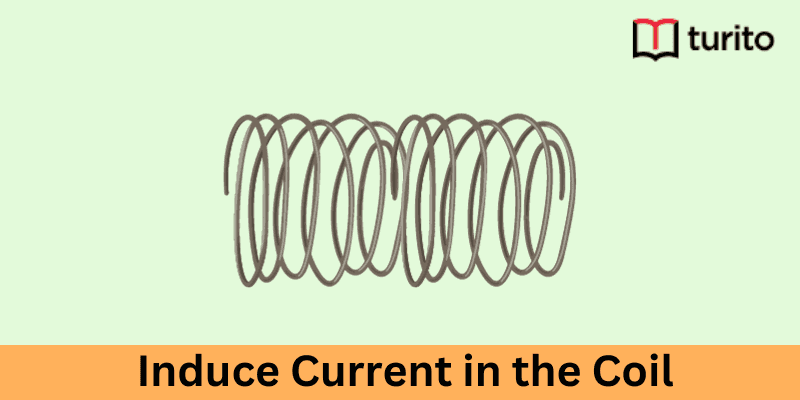
A current gets induced in the coil when it is exposed to changing magnetic field. The magnetic field can be changed in various ways:
Different ways to induce current:
1. Moving the magnet and keeping the coil at rest:

2. Moving the coil and keeping the magnet at rest:

3. Keeping the coils at rest and changing current in a coil:

4. Changing the area of a coil located in a magnetic field:

Motional Emf

An Emf that is developed in a conductor because of relative motion in a magnetic field is known as motional Emf.
When a conductor moves in a magnetic field, the free electrons inside it experience a force and starts accumulating at the one end of the conductor, as a result, one end of the conductor becomes positively charged whereas the other end becomes negatively charged, and a potential difference is developed. This induced electric potential is known as motional emf.


Factors on which motional Emf depend:
- Motional Emf (E) increases with an increase in the magnetic field (B).
- Motional Emf (E) increases with an increase in the velocity of the conductor (V).
- Motional Emf (E) increases with an increase in the length of the conductor (L).
- Motional Emf (E) also depends on the angle (θ) between V and B.
The formula for motional Emf (E):
E α velocity of the conductor α V
E α Magnetic field α B
E α Length of the conductor α L
E α the angle (θ) between the in the conductor and the magnetic field (B), E α sinθ
E is maximum when θ = 90, E is minimum when θ = 0
Thus, E = BVL sinθ
When a moving conductor is placed in a magnetic field, an electric current is induced. This induced current is reversed if the conductor moves in the opposite direction or if the magnetic field is reversed. Thus, there is a relation between the direction of the conductor, magnetic field, and the current induced. There is a rule that can be used to know the relationship among them that is known as Fleming’s Right-hand rule.
Fleming’s Right-Hand Rule
According to Fleming’s Right-hand rule when the thumb, forefinger, and central finger are kept mutually perpendicular to each other then

Thumb– shows the direction of motion of the conductor
Forefinger– shows the direction of the changing magnetic field
Middle finger – shows the direction of the induced current
Summary
- An emfis produced when there is a change in the magnetic flux linked to a closed circuit. This emf is called induced emf and the current produced is known as induced current
- A current can be induced in the coil in various ways: .
- By changing the strength of a magnetic field •
- By changing the distance between the magnet and the conductor .
- By changing the area of the loop located in the magnetic field. .
- By changing current in a coil.
- Motional EMF: An EMF that is developed in a conductor as a result of relative motion in a magnetic field is known as motional EMF
- The formula for motional EMF
- (E): E a velocity of the conductor a V
- E a Magnetic field a B E a Length of the conductor a L
- E a the angle (2) between the in the conductor and the magnetic field (B), F a sine
- E is maximum when = 90,
- E is minimum when = 0 Thus, E = BVL Sine Fleming’s Right-Hand Rule
- According to Fleming’s Right-hand rule when the thumb, forefinger, and central finger are kept mutually perpendicular to each other then:
- Thumb-shows the direction of motion of the conductor Forefinger-shows the direction of the changing magnetic field
- Middle finger – shows the direction of the induced current
Related topics
Effects of Force: Types, Examples, and Applications
Effects of Force Key Concepts What Is Force? A force comes into play when two or more objects interact with each other. This force when applied to an object by another, gives rise to some kind of change in the state of motion of an object. In this section we will be looking at these […]
Read More >>
Electrical Components and Symbols Explained with Diagrams
What Are Electrical Components? Consider the electrical components as the building blocks of any circuit. These are the actual components that cause electricity to do what you want it to do. Every switch you flip, every fan that spins, every charger that doesn’t overheat relies on these small parts doing their job quietly. You rarely […]
Read More >>Friction: Advantages and Disadvantages Explained
Friction is one of the most important concepts of friction, and today we will learn what friction is and everything there is to know about it. What Is Friction? According to Britannica, Friction is the force that stops one solid item from sliding or rolling over another. Frictional forces, like the traction needed to walk […]
Read More >>
Different Types of Waves and Their Examples
Introduction: We can’t directly observe many waves like light waves and sound waves. The mechanical waves on a rope, waves on the surface of the water, and a slinky are visible to us. So, these mechanical waves can serve as a model to understand the wave phenomenon. Explanation: Types of Waves: Fig:1 Types of waves […]
Read More >>

Other topics



Comments: